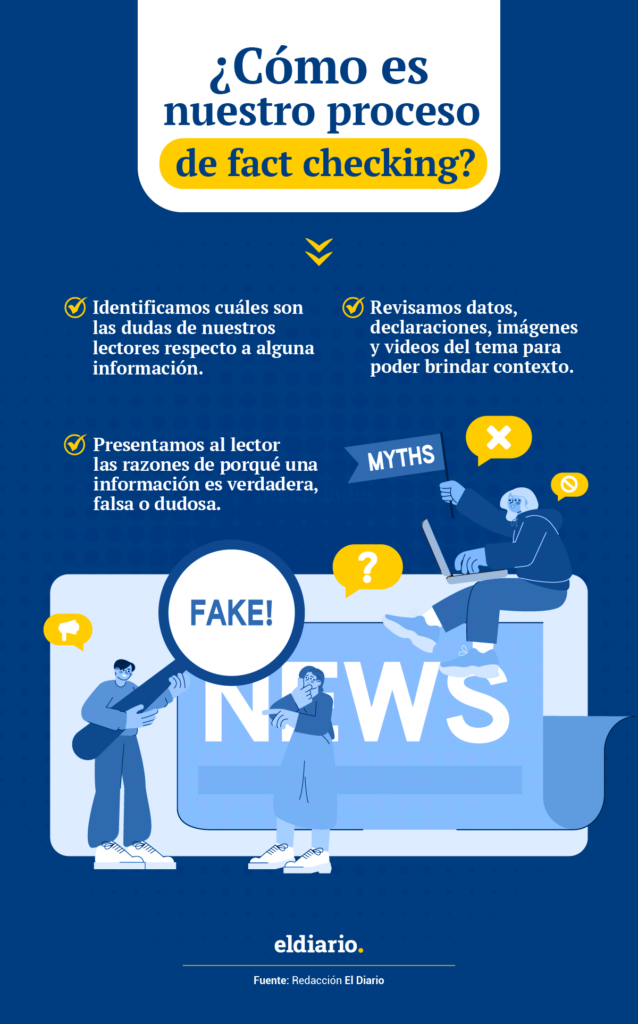
When information begins to circulate about a specific topic (death of a person, new decrees, resignation of politicians, etc.), the information can be placed in the Google browser to determine if there is an official site that has verified what has happened.
The search also makes it possible to determine whether the information is old or taken out of context. If the search engine does not return any results, the information provided is suspect.
When it comes to senior officials issuing information, it is always necessary to review official communiqués and contrast the information with that offered by various media outlets.
Whenever necessary, it is important to establish direct communication with the spokespersons or those affected by a problem or situation. For example, if it is said that a certain agency will cease to operate due to lack of personnel, it is necessary to contact that agency to corroborate whether the information is true.
If it is a statement issued by any public figure, fragments of what he or she said can be taken and placed in various search engines. If it does not appear, the information may be questionable.
Statements made by senior officials, when true, are usually reported on breaking news portals, on Twitter accounts of news agencies and on the accounts of their own spokespersons.
In WhatsApp groups it is common for information to circulate with emoticons and keywords such as “alert”, “last minute”, referring to information such as the flight or political leaders, calamities, cure for serious diseases, among others, but without any link or contact to corroborate what is expressed. These are usually fake news.
When dealing with audios sent via WhatsApp, it is necessary to perform a keyword search on Google or Twitter to determine if there are any matches with the information.
To check if an image is true or refers to a current event, you can use the Google Images option, where with the “reverse search” tool you can verify the origin of the photograph and when it was published.
For videos, the same tool can be used, taking a capture of several frames of the audiovisual and see if matches are found on the web.